Supplemental & Special
Needs Planning
Protecting loved ones with disabilities while preserving access to the government benefits they depend on.
Financial security without
losing vital benefits
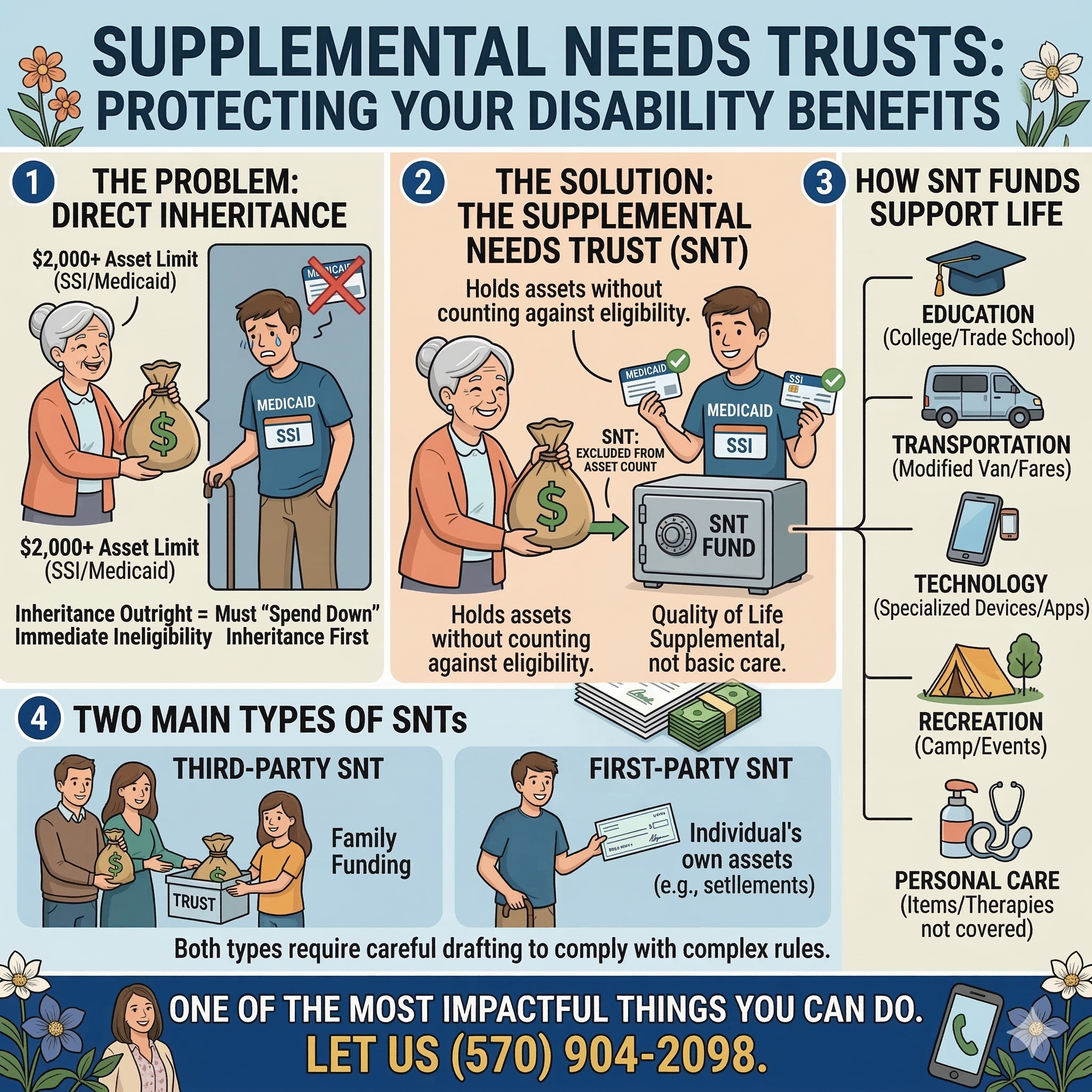
For families with a loved one who has a disability, estate planning requires a level of care and precision that goes well beyond standard wills and trusts. A well-intentioned gift — or even a modest inheritance — can disqualify a person with a disability from Medicaid, Supplemental Security Income, or other critical government programs. Proper planning prevents that from happening.
A supplemental needs trust (also called a special needs trust) is the primary legal tool for this purpose. It holds assets for the benefit of your loved one in a way that doesn't count against their eligibility for means-tested benefits. The funds can be used to meaningfully improve their quality of life — covering things like education, technology, transportation, recreation, and personal care that government programs simply don't provide.
We also work with families on ABLE accounts, letters of intent, and the coordination of these tools with the rest of the family's estate plan. The goal is a complete picture — not just one document in isolation.
This is deeply personal work. We approach every special needs matter with the care, patience, and attention to detail it deserves. Families trust us with some of their most important decisions, and we take that seriously.
- First-party supplemental needs trusts
- Third-party supplemental needs trusts
- ABLE account guidance
- Letter of intent planning
- Coordination with SSI & Medicaid rules
- Integration with family estate plans
- Trustee selection & guidance
- Plan reviews as circumstances change
Protecting someone you love
starts with a conversation.
We'll help you understand the options and build a plan that gives your loved one security — and your family peace of mind.
(570) 904-2098This website constitutes attorney advertising. Information contained herein is intended to serve as general advice that may or may not pertain to the laws of the Commonwealth of Pennsylvania. Communication to or with the firm does not constitute the creation of an attorney-client relationship.